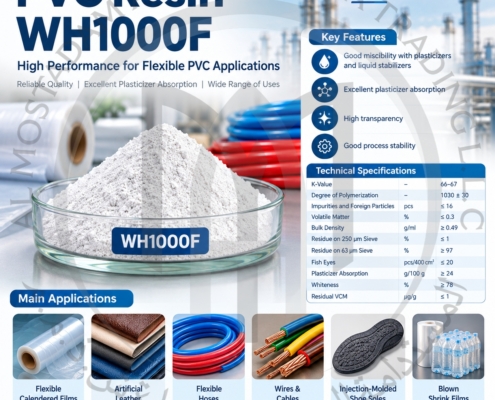
- Introduction to WH1000G PVC Grade for Rigid Applications
- Technical Specifications of PVC WH1000G and K-Value 65–67
- Key Features of WH1000G for PVC Manufacturers
- Typical Applications of PVC WH1000G
- Why K-Value Matters When Selecting WH1000G PVC
- WH1000G Particle Size, Bulk Density, and Processing Characteristics
- Plasticizer Absorption and Other WH1000G Performance Indicators
- Quality Control Parameters for WH1000G PVC Resin
- VCM Residual in WH1000G PVC
- Buying WH1000G PVC: What Should Buyers Check
- WH1000G PVC Price and Factors That Affect Purchase Cost
- Supplying WH1000G PVC to Industrial Manufacturers
- Testing WH1000G Before Full-Scale Production
- Is WH1000G the Right PVC Grade for Your Production Line
- Frequently Asked Questions About WH1000G PVC
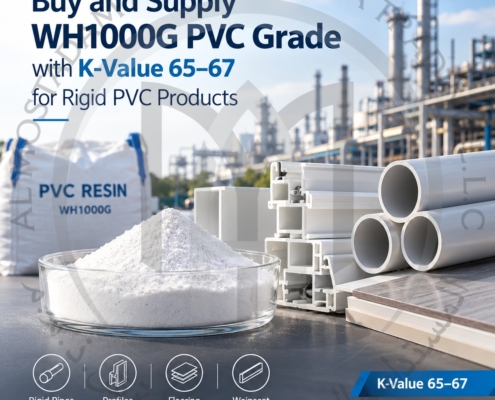
WH1000G is a suspension PVC resin developed for the production of rigid PVC products. With a K-Value of 65–67 and a degree of polymerization of 1030 ± 30, the grade is listed for applications such as rigid pipes, profiles, flooring substrates, and wainscot.For PVC manufacturers, the resin grade is one of the first things to consider when developing or adjusting a formulation. Molecular weight, particle characteristics, bulk density, plasticizer absorption, and the overall processing behavior of the resin can all affect how a dry blend performs on an extrusion line.
WH1000G is produced by Wanhua Chemical Group using a suspension polymerization process. The product information describes it as a PVC homopolymer with medium molecular weight and highlights its apparent density, dry-flow characteristics, extrusion processability, and physical properties.For buyers and manufacturers evaluating this grade, the technical specification is a useful starting point. The actual performance, however, will depend on the complete formulation and the conditions used during processing.This article looks at the main characteristics of WH1000G, its technical data, typical applications, and the points worth considering before purchasing the material for commercial production.
Introduction to WH1000G PVC Grade for Rigid Applications
Suspension PVC is widely used in the production of rigid and semi-rigid products because it can be formulated for a broad range of processing applications. Pipe, profile, construction panels, flooring components, and other extruded products are all common examples.
WH1000G belongs to this category of suspension PVC resins. The grade has a K-Value of 65–67, which places it in a range used for a number of rigid PVC extrusion applications.
The product sheet identifies four main characteristics:
- High apparent density
- Good dry-flow characteristics
- Good extrusion processability
- Excellent physical properties
These characteristics are particularly relevant to manufacturers running continuous extrusion processes. In a production environment, the resin needs to feed consistently, mix properly with additives, and provide stable processing behavior throughout the run.Of course, the resin is only one part of the equation. PVC compounds normally contain a combination of stabilizers, lubricants, processing aids, fillers, pigments, impact modifiers, and other additives depending on the final product. Equipment settings also have a significant influence on the finished material.For this reason, WH1000G should be evaluated in the context of the intended formulation rather than as an isolated raw material.
Technical Specifications of PVC WH1000G and K-Value 65–67
The K-Value is one of the most commonly referenced characteristics when comparing PVC resin grades.In practical terms, it is used as an indication of the molecular characteristics of the polymer and can provide useful information about its processing behavior. Different K-Value ranges are selected for different applications because molecular characteristics influence melt behavior and other properties during processing.The WH1000G product specification gives a K-Value of 65–67 and a degree of polymerization of 1030 ± 30.
The technical performance data shown in the product sheet are as follows:
| Technical indicator | WH1000G specification |
|---|---|
| Degree of Polymerization | 1030 ± 30 |
| Impurities and Foreign Particles | ≤ 16 pcs |
| Volatile Matter | ≤ 0.4% |
| Bulk Density | ≥ 0.51 g/ml |
| Residue on 250 μm Sieve | ≤ 1.6% |
| Residue on 63 μm Sieve | ≥ 97% |
| Number of “Fish Eyes” | ≤ 20 pcs/400 cm² |
| Plasticizer Absorption of 100 g PVC Resin | ≥ 20 g |
| Whiteness (160°C, 10 min) | ≥ 78% |
| VCM Residual | ≤ 5 μg/g |
The values above are taken from the product information shown in the supplied technical sheet. The sheet specifically describes them as typical values, not warranted values.That distinction matters when purchasing PVC on a commercial scale. A product brochure can be used for initial evaluation, but buyers should rely on the current technical documentation and the Certificate of Analysis for the actual batch when verifying material quality.
Key Features of WH1000G for PVC Manufacturers
High Apparent Density
WH1000G has a listed bulk density of at least 0.51 g/ml.Bulk density is not simply a laboratory number for a PVC processor. It can affect how the powder behaves during storage, conveying, feeding, and dry blending.On an industrial line, consistent material feeding is important because fluctuations in feed rate can eventually affect extrusion stability and production output. The bulk-density characteristics of a resin are therefore worth considering when evaluating how a new grade will behave in an existing production setup.
Good Dry-Flow Characteristics
The product information also highlights the resin’s dry-flow characteristics.Before PVC reaches the extruder, it is normally mixed with a number of additives to create a dry blend. The way the resin moves and mixes with those components can influence the consistency of the blend.Good powder flow can make handling and feeding easier, particularly in larger production facilities where automated conveying and feeding systems are used.
Extrusion Processability
WH1000G is listed as having good extrusion processability, which is relevant to its stated applications.
Rigid PVC pipes and profiles are typically manufactured through extrusion, where the compound is heated, plasticized, homogenized, and pushed through a die to create the required cross-sectional shape.Stable extrusion depends on many variables, including resin characteristics, stabilizer and lubricant levels, processing aids, filler content, screw design, temperature settings, screw speed, and cooling conditions.
A resin with suitable processing characteristics can provide a good starting point, but the final processing window needs to be established by the manufacturer.
Physical Properties
The product sheet describes WH1000G as having excellent physical properties.For rigid PVC products, physical performance is important because the final material may need to withstand mechanical loads, temperature changes, handling, installation, and long-term service conditions.The exact properties of the finished product will depend on the formulation and manufacturing process. A pipe compound, for example, will not necessarily use the same additive package as a window profile or a flooring substrate.
Typical Applications of PVC WH1000G
The WH1000G product sheet lists the following typical applications:
- Rigid pipe
- Rigid profile
- Flooring substrate
- Wainscot
These applications are largely associated with rigid PVC extrusion.
Rigid PVC Pipe
PVC pipe production is one of the most established applications for rigid PVC resin.Pipe manufacturers generally look for a combination of stable processing, consistent powder characteristics, and the ability to achieve the required mechanical and dimensional properties in the finished pipe.WH1000G, with its K-Value of 65–67, is listed for rigid pipe applications. Its suitability for a particular pipe formulation should be confirmed through the manufacturer’s own formulation and extrusion trials.
Pipe production can also involve different requirements depending on the type of pipe being manufactured. Pressure pipes, drainage pipes, conduit, and other products may have different formulation and performance requirements.For that reason, the grade selection should always be matched with the relevant product specification.
Rigid PVC Profile
Rigid PVC profiles are another listed application for WH1000G.Profiles are used in a variety of construction and building products, including window and door systems, decorative components, trims, and other extruded sections.Profile extrusion can be sensitive to processing stability and surface quality.
The resin therefore needs to work well with the complete stabilizer, lubricant, processing-aid, filler, and pigment system used by the manufacturer.WH1000G can be considered as a resin option for manufacturers producing rigid PVC profiles and looking for a suspension PVC grade in the 65–67 K-Value range.
Flooring Substrate
The product sheet also identifies flooring substrate as an application.PVC flooring products can be formulated in different ways depending on their construction and performance requirements. The substrate may need to provide a suitable combination of dimensional stability, mechanical properties, processing characteristics, and surface quality.
As with other applications, the suitability of WH1000G should be established through testing with the actual formulation rather than relying on the resin specification alone.
Wainscot
Wainscot is also listed among the typical applications for WH1000G.Rigid PVC used in wall and interior applications generally requires good extrusion behavior and a consistent appearance. Depending on the final product design, manufacturers may also place particular emphasis on whiteness, surface quality, dimensional stability, and resistance to processing-related defects.
Why K-Value Matters When Selecting WH1000G PVC
For buyers who regularly work with PVC resin, K-Value is an important specification to understand.The K-Value provides an indication of the polymer’s molecular characteristics and is commonly used to distinguish between PVC grades intended for different processing applications.WH1000G has a K-Value of 65–67.
This does not mean that the grade is automatically suitable for every rigid PVC application. Rather, it gives the formulator a useful reference when comparing it with other PVC grades.The degree of polymerization listed for WH1000G is 1030 ± 30, providing another indication of the polymer characteristics of the grade.
When comparing two PVC resins, it is therefore better to look at the complete specification rather than focusing only on K-Value. Particle size, bulk density, volatile matter, fish eyes, whiteness, residual VCM, and other parameters can also be relevant.For a manufacturer already running a particular PVC formulation, the most reliable way to assess a new grade is usually a controlled production trial.
WH1000G Particle Size, Bulk Density, and Processing Characteristics
Particle characteristics can have a practical effect on PVC powder handling and processing.
For WH1000G, the product sheet reports:
- Residue on 250 μm sieve: ≤1.6%
- Residue on 63 μm sieve: ≥97%
These figures describe the particle-size characteristics specified for the resin.Particle size can affect powder flow, dry blending, additive absorption, and the behavior of the material before it enters the extrusion process.Bulk density is another relevant parameter. WH1000G has a listed value of ≥0.51 g/ml.
For large-scale manufacturers, these characteristics can be useful when comparing a new resin against a grade already being used on the production line. Even when two materials have similar K-Values, differences in particle characteristics can sometimes become noticeable during material handling and processing.
Plasticizer Absorption and Other WH1000G Performance Indicators
The WH1000G technical sheet lists plasticizer absorption at ≥20 g per 100 g of PVC resin.Plasticizer absorption describes how the resin interacts with plasticizer and is one of the physical characteristics that can be used when evaluating PVC powder.Although WH1000G is positioned mainly for rigid PVC applications, this parameter remains part of the overall technical profile of the resin.
Other indicators in the specification include volatile matter, whiteness, impurities, fish eyes, and residual VCM.Looking at these parameters together gives a more complete picture of the resin than relying on one specification alone.
For example, a manufacturer concerned with the appearance of a white PVC profile may pay close attention to whiteness and fish-eye performance, while a manufacturer focused on high-volume extrusion may place more emphasis on processing consistency and powder handling.The relevant parameters will ultimately depend on the final product.
Quality Control Parameters for WH1000G PVC Resin
Quality control becomes especially important when PVC resin is purchased in large quantities.The WH1000G specification includes several parameters that can be used as part of incoming quality checks.
Impurities and Foreign Particles
The listed value is ≤16 pcs.Foreign particles can be undesirable in PVC processing, particularly when the finished product has a visible surface or tight quality requirements.
Volatile Matter
WH1000G has a listed volatile matter value of ≤0.4%.Volatile content is one of the standard parameters used when evaluating the physical condition of PVC resin.
Fish Eyes
The product sheet specifies ≤20 pcs/400 cm² for fish eyes.This is particularly relevant for manufacturers producing products where surface appearance is important. Visible imperfections can lead to rejection or additional processing losses depending on the application.
Whiteness
The listed whiteness value is ≥78% at 160°C for 10 minutes.Whiteness can be an important characteristic for products that are sold in white or light colors, although the appearance of the final product will also depend on the stabilizer system, pigments, processing conditions, and other formulation components.
VCM Residual in WH1000G PVC
Residual vinyl chloride monomer is another specification included in the WH1000G technical data.The product sheet gives a VCM residual value of ≤5 μg/g.
Residual VCM is a standard quality consideration in PVC resin production. Buyers operating in different countries or supplying products into regulated applications should also make sure that the material and finished product meet the relevant regulatory requirements for their market.For procurement purposes, the specification should be checked against the current technical documentation supplied with the material.A batch-specific Certificate of Analysis can also provide useful confirmation that the supplied material has been tested against the agreed specifications.
Buying WH1000G PVC: What Should Buyers Check
For a commercial PVC purchase, the technical grade is only the beginning.Before placing an order, a buyer should normally confirm several points with the supplier.
Grade and Specification
First, confirm that the material offered is WH1000G and that the current technical specification matches the requirements of the intended application.
Certificate of Analysis
For production purchases, the COA for the relevant batch is an important document. It allows the buyer to compare the shipment against the agreed quality parameters.
Quantity
The required quantity should be clearly specified because commercial terms can vary considerably between trial quantities, individual bags, pallets, and full-container or larger-volume orders.
Packaging
Packaging should be agreed in advance, particularly when the material is being imported. The appropriate packaging format depends on the buyer’s storage and handling system.
Destination and Delivery Terms
For international purchases, the final cost is influenced by the destination, freight, insurance, customs, port charges, and agreed Incoterms.Comparing the product price alone can therefore give an incomplete picture of the actual procurement cost.
Supply Continuity
For a manufacturer running a continuous extrusion operation, reliable supply can be just as important as the initial price.A supplier that can provide consistent documentation, predictable lead times, and clear communication can make long-term procurement considerably easier.
WH1000G PVC Price and Factors That Affect Purchase Cost
PVC resin prices are not fixed. Market conditions can change based on supply and demand, production costs, feedstock economics, freight rates, regional availability, currency movements, and order volume.For this reason, buyers looking for the current price of WH1000G should request a quotation based on their actual purchasing conditions.
A useful RFQ should include:
- Required quantity
- Destination
- Packaging requirements
- Delivery terms
- Payment terms
- Target delivery date
- Required documentation
This makes it easier for suppliers to provide a meaningful commercial offer.For international buyers, the landed cost is usually more useful than the ex-works or FOB price alone. Freight, insurance, customs duties, port handling, and local transportation can all affect the final cost of the resin.
Supplying WH1000G PVC to Industrial Manufacturers
A consistent supply chain matters when PVC resin is used as a core production raw material.Manufacturers of pipes, profiles, flooring components, and other rigid PVC products may consume substantial quantities of resin every month. An interruption in supply can affect production schedules and finished-product deliveries.A good supply arrangement should cover more than simply delivering bags of PVC resin.
The buyer should have clear information about:
- Product grade
- Available quantity
- Batch information
- Technical specifications
- Packaging
- Origin
- Loading point
- Estimated transit time
- Commercial terms
For recurring orders, it can also be useful to establish a standard quality specification and documentation process. This makes it easier to compare future shipments and identify any significant changes in material characteristics.
Testing WH1000G Before Full-Scale Production
Even when a PVC resin appears to match an existing specification, a production trial is a sensible step before switching a large-volume operation to a new material.The trial does not necessarily need to be complicated. Manufacturers can compare the new resin with the grade currently in use under controlled conditions.
Some of the points worth monitoring include:
- Dry-blend quality
- Powder feeding
- Extrusion stability
- Processing temperature
- Melt behavior
- Surface appearance
- Dimensional consistency
- Production output
- Scrap rate
- Finished-product properties
This type of comparison can reveal differences that may not be obvious from a technical data sheet.For example, two grades may have similar K-Values while behaving differently in a particular formulation because of differences in particle characteristics or interactions with the additive package.That is why a production trial is often more useful than making a decision based solely on a specification table.
Is WH1000G the Right PVC Grade for Your Production Line
WH1000G is a suspension PVC homopolymer with a K-Value of 65–67 and a listed degree of polymerization of 1030 ± 30.According to the available product information, the grade is intended for rigid PVC applications, with typical uses including rigid pipes, rigid profiles, flooring substrates, and wainscot.Its specification also includes a bulk density of ≥0.51 g/ml, volatile matter of ≤0.4%, residue on the 250 μm sieve of ≤1.6%, residue on the 63 μm sieve of ≥97%, and residual VCM of ≤5 μg/g.
The product sheet highlights high apparent density, good dry-flow characteristics, good extrusion processability, and physical properties as key features.For manufacturers, these specifications provide a useful basis for evaluating the grade. The final decision should then be made against the actual requirements of the product and the processing line.
If WH1000G is being considered as a replacement for another PVC resin, a production trial is recommended before making a full-scale change. This gives the manufacturer an opportunity to evaluate the resin under real operating conditions and confirm whether the formulation and processing parameters need adjustment.For buyers, the next step is to obtain the current technical documentation, confirm availability and commercial terms, and request a batch-specific COA where applicable.
In short, WH1000G is a PVC grade worth considering for manufacturers looking for a K-Value 65–67 suspension resin for rigid extrusion applications, particularly pipe, profile, flooring substrate, and wainscot production.
 https://almostadamco.com/wp-content/uploads/2026/10/PET-Resin-Trade-in-UAE.png
1254
1254
almostadamco
https://almostadamco.com/wp-content/uploads/2025/01/AL-MOSTADAM-LOGO-PNG-290x300.png
almostadamco2026-10-16 00:38:012026-10-16 00:38:05How to Choose a Reliable PET Resin Supplier in UAE: A Complete Guide for Industrial Buyers
 https://almostadamco.com/wp-content/uploads/2026/09/WH1800-PVC-Resin-–-K-Value-77–78-for-Medical-Industrial-Applications.jpg
1254
1254
almostadamco
https://almostadamco.com/wp-content/uploads/2025/01/AL-MOSTADAM-LOGO-PNG-290x300.png
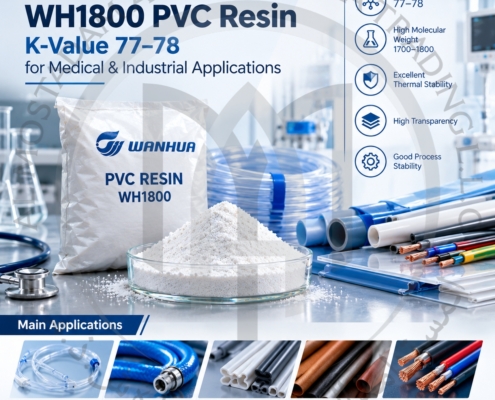
almostadamco2026-09-24 21:19:332026-09-24 21:22:12WH1800 PVC Resin – K-Value 77–78 for Medical & Industrial
 https://almostadamco.com/wp-content/uploads/2026/09/WH1300-PVC-Resin-with-K-Value-71–72-for-Flexible-PVC.jpg
1254
1254
almostadamco
https://almostadamco.com/wp-content/uploads/2025/01/AL-MOSTADAM-LOGO-PNG-290x300.png
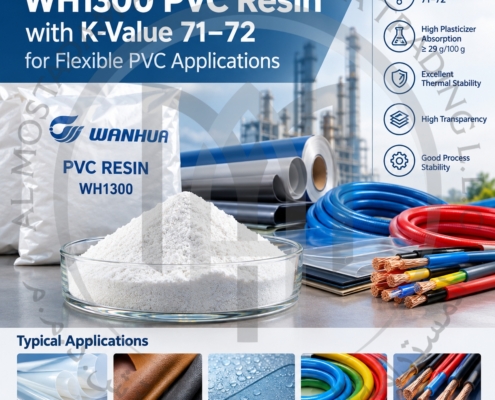
almostadamco2026-09-20 22:13:092026-09-20 22:19:03WH1300 PVC Resin with K-Value 71–72 for Flexible PVC
 https://almostadamco.com/wp-content/uploads/2026/09/Buy-and-Supply-WH1000G-PVC-Grade-with-K-Value-65–67-for-Rigid-PVC-Products-1.jpg
1254
1254
almostadamco
https://almostadamco.com/wp-content/uploads/2025/01/AL-MOSTADAM-LOGO-PNG-290x300.png
almostadamco2026-09-12 21:50:402026-09-12 21:50:43Buy and Supply WH1000G PVC Grade with K-Value 65–67 for Rigid PVC Products