
- PVC WH700 Resin: Properties, Applications, Processing Guide & Technical Specifications
- What Is PVC WH700?
- Key Features of PVC WH700
- Technical Specifications of PVC WH700
- Typical Applications of PVC WH700
- Storage and Handling Guidelines for PVC WH700
- Processing Recommendations for PVC WH700
- Conclusion: Choosing PVC WH700 for Reliable Rigid PVC Production
- Frequently Asked Questions About PVC WH700
Selecting the right PVC resin grade is essential for achieving consistent processing performance and reliable product quality. PVC WH700 is a suspension-grade PVC homopolymer designed for applications that require good processability, stable thermal performance, and suitable flow characteristics.
Produced by Wanhua Chemical Group Co., Ltd., WH700 features a K-value range of 55–59 and is commonly used in rigid PVC applications such as calendered sheets, foamed boards, injection molded products, and rigid fittings.
This guide reviews the key properties, technical specifications, processing advantages, and typical applications of PVC WH700. Understanding these characteristics can help manufacturers evaluate whether this resin grade is suitable for their production requirements.
PVC WH700 Resin: Properties, Applications, Processing Guide & Technical Specifications
What Is PVC WH700?
PVC WH700 is a suspension-grade polyvinyl chloride (PVC) homopolymer resin developed for rigid PVC applications that require reliable processing performance, good thermal stability, and consistent product quality.
Manufactured by Wanhua Chemical Group Co., Ltd., WH700 is a low molecular weight PVC resin with a K-value range of 55–59. Its formulation provides a balance of flow characteristics, processability, and stability, making it suitable for several rigid PVC manufacturing processes.
The resin is produced through the suspension polymerization process and is supplied as a PVC powder that can be compounded with appropriate additives depending on the final application. During processing, manufacturers may combine the resin with stabilizers, lubricants, processing aids, pigments, or other modifiers to achieve the required mechanical properties and appearance.
Due to its processing characteristics, PVC WH700 is commonly selected for products such as rigid calendered sheets, foamed boards, injection molded components, and rigid fittings. However, final performance depends not only on the resin grade but also on formulation design, processing conditions, and production equipment.
Before selecting WH700 for a specific application, manufacturers should review the technical data sheet and confirm that the resin specifications meet their production requirements.
Key Features of PVC WH700
PVC WH700 is designed to provide a balance of processing stability, flow performance, and material consistency for rigid PVC applications. Its technical characteristics make it suitable for manufacturers looking for a resin grade that performs reliably across different production processes.
High Apparent Density
One of the key characteristics of WH700 is its high apparent density. This property can contribute to better powder handling, improved feeding behavior, and more consistent material flow during processing. Stable powder characteristics are especially important in continuous manufacturing environments where production consistency is a priority.
Good Dry Flow Characteristics
WH700 offers good dry flow performance, allowing the resin to move efficiently through feeding and processing equipment. Good powder flow can help improve material handling, reduce feeding irregularities, and support more stable production conditions.
Good Heat Stability
Thermal stability is an important factor in PVC processing because the material can be sensitive to excessive heat exposure. WH700 is designed with good heat stability characteristics, helping manufacturers maintain product quality during processing when appropriate stabilizer systems and operating conditions are applied.
Excellent Formability and Processability
The processing characteristics of WH700 make it suitable for applications where good forming behavior and consistent production performance are required. Its balance of processability and material properties supports manufacturing processes such as calendering, foaming, injection molding, and production of rigid fittings.
As with all PVC resin grades, final product performance depends on the complete formulation, including additives, processing equipment, and production parameters. Manufacturers should evaluate WH700 under their actual operating conditions to achieve the desired product quality and efficiency.
Technical Specifications of PVC WH700
Understanding the technical specifications of PVC WH700 helps manufacturers evaluate whether this resin grade is suitable for their production requirements. The following values are typical indicators provided by the supplier and should be used as a reference when comparing material options.
| Technical Indicator | Unit | Typical Value |
|---|---|---|
| K-value | — | 55–59 |
| Degree of Polymerization | — | 700 ± 30 |
| Number of Impurities and Foreign Particles | pcs ≤ | 20 |
| Volatile Matter | % ≤ | 0.3 |
| Bulk Density | g/ml ≥ | 0.52 |
| Residue on 250 μm Sieve | % ≤ | 1.6 |
| Residue on 63 μm Sieve | % ≥ | 95 |
| Number of “Fish Eyes” | pcs/400 cm² ≤ | 20 |
| Plasticizer Absorption of 100 g PVC Resin | g ≥ | 14 |
| Whiteness (160°C, 10 min) | % ≥ | 75 |
| Residual VCM | μg/g ≤ | 5 |
Note: Values shown above are typical technical data provided by the supplier and are not guaranteed specifications. Actual performance may vary depending on processing conditions and formulation design.
Understanding the Key Parameters
Among these specifications, the K-value is one of the most important indicators for identifying PVC resin characteristics. A K-value range of 55–59 places WH700 in a range commonly associated with good processability and suitability for rigid PVC applications.
Bulk density and particle size distribution also influence material handling and feeding behavior. WH700’s bulk density value and sieve residue characteristics contribute to more consistent powder flow during manufacturing.
Residual VCM (vinyl chloride monomer) content is another important quality parameter, particularly for manufacturers that require controlled material purity. Lower residual VCM values indicate better control during the polymer production process.
When evaluating WH700 for a specific application, technical specifications should always be considered together with processing requirements, additive formulation, and final product performance expectations.
Typical Applications of PVC WH700
PVC WH700 is primarily used in rigid PVC applications where good processability, stable material performance, and consistent product quality are required. Its balance of flow characteristics and forming ability makes it suitable for several manufacturing processes, including calendering, foaming, and injection molding.
Rigid Calendered Sheets
One of the typical applications of WH700 is the production of rigid PVC sheets manufactured through the calendering process. These sheets are used in applications where uniform thickness, stable dimensions, and a consistent surface finish are important.
The processing characteristics of WH700 can support efficient sheet production when combined with the appropriate additives and processing conditions. Manufacturers should optimize formulation parameters to achieve the required flexibility, surface quality, and mechanical performance for the final product.
Foamed Boards
WH700 is also suitable for producing PVC foamed boards, where controlled processing behavior and material consistency are important factors. Foamed PVC products are commonly used in applications that require lightweight structures, smooth surfaces, and easy fabrication.
The final properties of foamed boards depend on factors such as foaming agents, additive systems, processing temperature, and equipment settings. Proper formulation adjustment is essential to achieve the desired density and surface characteristics.
Injection Molded Products
Due to its good formability and processability, PVC WH700 can be used for injection molding applications. The resin’s processing behavior allows manufacturers to produce rigid molded components with consistent dimensions and surface quality.
Before full-scale production, processors should evaluate mold design, processing parameters, and additive selection to ensure the material performs effectively in the intended application.
Rigid Fittings
WH700 is also used in the production of rigid PVC fittings where dimensional stability and reliable processing performance are required. These products often require consistent material behavior to maintain accurate shapes and dependable performance during service.
As with other PVC applications, the final properties of finished products depend on the complete compound formulation and manufacturing conditions rather than the resin grade alone.
Selecting the right processing conditions and formulation approach allows manufacturers to take advantage of WH700’s characteristics and achieve consistent results across different rigid PVC applications.
Storage and Handling Guidelines for PVC WH700
Proper storage and handling of PVC WH700 are important steps for maintaining resin quality and achieving consistent processing performance. Although PVC resin is generally stable under suitable storage conditions, exposure to unsuitable environments or contamination can affect material handling and production consistency.
Recommended Storage Conditions
PVC WH700 should be stored in a clean, dry area away from direct sunlight, excessive heat, and sources of contamination. Keeping the resin in its original sealed packaging until use helps protect the material from moisture, dust, and foreign particles.
Warehouses should maintain good ventilation and avoid conditions that may cause packaging damage or material contamination. Proper inventory management, including a first-in, first-out (FIFO) system, can help maintain consistent material quality and reduce unnecessary storage periods.
Material Handling Practices
During transportation and handling, care should be taken to prevent damage to bags or bulk containers. Contamination from other polymers, dust, or foreign materials should be avoided, as even small amounts of impurities may affect processing behavior and final product appearance.
Manufacturers should use clean feeding and conveying equipment to maintain resin purity. Regular inspection of storage areas and handling systems can help prevent quality issues before they occur.
Preparation Before Processing
PVC WH700 is supplied as a resin powder and is normally compounded with additives such as stabilizers, lubricants, processing aids, and other modifiers according to the requirements of the final product.
Before processing, manufacturers should verify that the resin meets the required quality parameters and that the material has been stored correctly. If any abnormal conditions such as contamination, clumping, or packaging damage are observed, the material should be evaluated before entering production.
Maintaining proper storage practices and consistent handling procedures helps manufacturers preserve the processing advantages of PVC WH700 and achieve more reliable production results.
Practical Tips and Technical Recommendations
For a successful implementation of PVC WH100 in production, run small-scale trials to dial in stabilizer levels, lubricant types, and die design before committing to large runs; these steps reduce scrap and ensure repeatable aesthetics. Monitor melt temperature with in-line sensors rather than relying solely on setpoints, since die and tool geometry influence shear heating significantly. If flame resistance is a product requirement, specify appropriate flame-retardant systems early, as they interact with stabilizers and pigments. Machining warm, annealed WH100 parts yields cleaner edges and reduces crazing; recommend annealing cycles tailored to wall thickness to relieve internal stresses. When sourcing WH100 for new or regulated markets, request a full regulatory compliance package and consider on-site trial quantities from trusted distributors such as almostadamco to validate every batch against your process and end-use standards.
Processing Recommendations for PVC WH700
Achieving consistent results with PVC WH700 requires proper formulation design, suitable processing conditions, and careful control of manufacturing parameters. Although the resin provides good processability and forming characteristics, the final product performance depends on the complete compound system and production setup.
Compounding Considerations
PVC WH700 is typically processed after compounding with additives selected according to the final application requirements. Common additives used in rigid PVC formulations may include heat stabilizers, lubricants, processing aids, impact modifiers, pigments, and other performance-enhancing components.
The selection and balance of these additives can influence important properties such as thermal stability, surface appearance, melt behavior, and mechanical performance. Manufacturers should optimize the formulation based on the intended product and processing method.
Processing Control
During production, maintaining stable processing conditions is essential for achieving consistent product quality. Factors such as equipment design, screw configuration, processing speed, formulation balance, and temperature control can all influence the behavior of PVC resin during manufacturing.
For processes such as calendering, injection molding, and production of rigid fittings, processors should evaluate the relationship between material characteristics and machine settings to achieve the required product dimensions and surface quality.
Quality Verification Before Production
Before moving to large-scale manufacturing, trial production is recommended to confirm that WH700 performs as expected with the selected formulation and equipment. Testing trial batches can help identify potential issues related to flow behavior, forming performance, appearance, and dimensional stability.
Manufacturers should also review supplier documentation, including technical data sheets and quality certificates, to ensure that each material batch meets the required specifications.
By combining appropriate formulation practices with controlled processing conditions, PVC WH700 can provide reliable performance for a wide range of rigid PVC applications.
Conclusion: Choosing PVC WH700 for Reliable Rigid PVC Production
PVC WH700 is a suspension-grade PVC homopolymer resin designed to support manufacturers producing rigid PVC products that require consistent processing performance, good formability, and stable material characteristics.
With a K-value range of 55–59, high apparent density, good dry flow behavior, and reliable heat stability, WH700 provides a balanced solution for applications such as rigid calendered sheets, foamed boards, injection molded products, and rigid fittings.
However, selecting the right PVC resin involves more than reviewing a single specification. Successful production depends on factors such as formulation design, additive selection, processing conditions, equipment performance, and quality control procedures.
Before starting commercial production, manufacturers should evaluate the resin under actual operating conditions and review supplier documentation, including technical data sheets and quality certificates. This approach helps ensure compatibility with the intended application and reduces the risk of production issues.
By combining the material advantages of PVC WH700 with proper processing practices, manufacturers can achieve more consistent product quality, improved production reliability, and better control over final product performance.
 https://almostadamco.com/wp-content/uploads/2026/08/PVC-Resin-WH800-Technical-Specifications-Features-and-Applications.jpg
1254
1254
almostadamco
https://almostadamco.com/wp-content/uploads/2025/01/AL-MOSTADAM-LOGO-PNG-290x300.png
almostadamco2026-08-21 14:06:222026-08-21 14:06:25PVC Resin WH800: Technical Specifications, Features, and Applications
https://almostadamco.com/wp-content/uploads/2026/08/PVC-Resin-WH800-Technical-Specifications-Features-and-Applications.jpg
1254
1254
almostadamco
https://almostadamco.com/wp-content/uploads/2025/01/AL-MOSTADAM-LOGO-PNG-290x300.png
almostadamco2026-08-21 14:06:222026-08-21 14:06:25PVC Resin WH800: Technical Specifications, Features, and Applications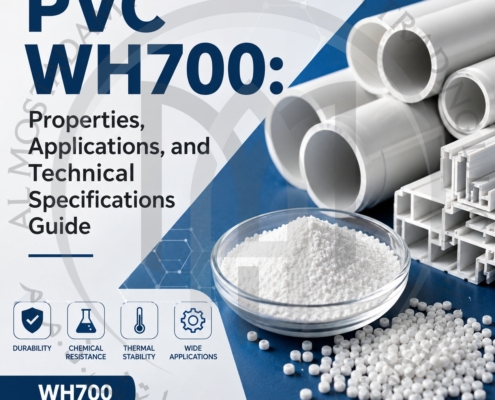 https://almostadamco.com/wp-content/uploads/2026/08/PVC-WH700-Properties-Applications-and-Technical-Specifications-Guide.jpg
1254
1254
almostadamco
https://almostadamco.com/wp-content/uploads/2025/01/AL-MOSTADAM-LOGO-PNG-290x300.png
almostadamco2026-08-09 16:24:402026-08-09 16:24:43PVC WH700: Properties, Applications, and Technical Specifications Guide
https://almostadamco.com/wp-content/uploads/2026/08/PVC-WH700-Properties-Applications-and-Technical-Specifications-Guide.jpg
1254
1254
almostadamco
https://almostadamco.com/wp-content/uploads/2025/01/AL-MOSTADAM-LOGO-PNG-290x300.png
almostadamco2026-08-09 16:24:402026-08-09 16:24:43PVC WH700: Properties, Applications, and Technical Specifications Guide https://almostadamco.com/wp-content/uploads/2026/08/How-to-Buy-PET-PP-and-PE-in-Bulk-Safely-Supplier-Guide-Pricing-Quality-Control.jpg
1254
1254
almostadamco
https://almostadamco.com/wp-content/uploads/2025/01/AL-MOSTADAM-LOGO-PNG-290x300.png
almostadamco2026-08-04 13:18:482026-08-04 13:23:56How to Buy PET, PP and PE in Bulk Safely (Supplier Guide, Pricing & Quality Control)
https://almostadamco.com/wp-content/uploads/2026/08/How-to-Buy-PET-PP-and-PE-in-Bulk-Safely-Supplier-Guide-Pricing-Quality-Control.jpg
1254
1254
almostadamco
https://almostadamco.com/wp-content/uploads/2025/01/AL-MOSTADAM-LOGO-PNG-290x300.png
almostadamco2026-08-04 13:18:482026-08-04 13:23:56How to Buy PET, PP and PE in Bulk Safely (Supplier Guide, Pricing & Quality Control) https://almostadamco.com/wp-content/uploads/2026/08/How-to-Choose-the-Right-HDPE-Grade.jpg
1254
1254
almostadamco
https://almostadamco.com/wp-content/uploads/2025/01/AL-MOSTADAM-LOGO-PNG-290x300.png
almostadamco2026-08-03 13:36:292026-08-03 13:39:30How to Choose the Right HDPE Grade
https://almostadamco.com/wp-content/uploads/2026/08/How-to-Choose-the-Right-HDPE-Grade.jpg
1254
1254
almostadamco
https://almostadamco.com/wp-content/uploads/2025/01/AL-MOSTADAM-LOGO-PNG-290x300.png
almostadamco2026-08-03 13:36:292026-08-03 13:39:30How to Choose the Right HDPE Grade https://almostadamco.com/wp-content/uploads/2026/07/How-Naphtha-Is-Converted-into-Ethylene-and-Propylene.jpg
1254
1254
almostadamco
https://almostadamco.com/wp-content/uploads/2025/01/AL-MOSTADAM-LOGO-PNG-290x300.png
almostadamco2026-07-05 14:33:142026-07-05 14:33:16How Naphtha Is Converted into Ethylene and Propylene
https://almostadamco.com/wp-content/uploads/2026/07/How-Naphtha-Is-Converted-into-Ethylene-and-Propylene.jpg
1254
1254
almostadamco
https://almostadamco.com/wp-content/uploads/2025/01/AL-MOSTADAM-LOGO-PNG-290x300.png
almostadamco2026-07-05 14:33:142026-07-05 14:33:16How Naphtha Is Converted into Ethylene and Propylene https://almostadamco.com/wp-content/uploads/2026/06/How-to-Verify-Polymer-Quality-Before-Purchase.jpg
1254
1254
almostadamco
https://almostadamco.com/wp-content/uploads/2025/01/AL-MOSTADAM-LOGO-PNG-290x300.png
almostadamco2026-06-30 15:54:582026-07-05 14:21:06How to Verify Polymer Quality Before Purchase
https://almostadamco.com/wp-content/uploads/2026/06/How-to-Verify-Polymer-Quality-Before-Purchase.jpg
1254
1254
almostadamco
https://almostadamco.com/wp-content/uploads/2025/01/AL-MOSTADAM-LOGO-PNG-290x300.png
almostadamco2026-06-30 15:54:582026-07-05 14:21:06How to Verify Polymer Quality Before Purchase https://almostadamco.com/wp-content/uploads/2026/06/What-Is-PET-Polyethylene-Terephthalate.jpeg
1254
1254
almostadamco
https://almostadamco.com/wp-content/uploads/2025/01/AL-MOSTADAM-LOGO-PNG-290x300.png
almostadamco2026-06-22 16:39:042026-06-22 17:09:52What Is PET (Polyethylene Terephthalate)?
https://almostadamco.com/wp-content/uploads/2026/06/What-Is-PET-Polyethylene-Terephthalate.jpeg
1254
1254
almostadamco
https://almostadamco.com/wp-content/uploads/2025/01/AL-MOSTADAM-LOGO-PNG-290x300.png
almostadamco2026-06-22 16:39:042026-06-22 17:09:52What Is PET (Polyethylene Terephthalate)? https://almostadamco.com/wp-content/uploads/2026/06/HDPE-vs-PVC-Pipe.jpg
1254
1254
almostadamco
https://almostadamco.com/wp-content/uploads/2025/01/AL-MOSTADAM-LOGO-PNG-290x300.png
almostadamco2026-06-20 15:24:542026-06-28 13:45:21HDPE vs PVC Pipe
https://almostadamco.com/wp-content/uploads/2026/06/HDPE-vs-PVC-Pipe.jpg
1254
1254
almostadamco
https://almostadamco.com/wp-content/uploads/2025/01/AL-MOSTADAM-LOGO-PNG-290x300.png
almostadamco2026-06-20 15:24:542026-06-28 13:45:21HDPE vs PVC Pipe https://almostadamco.com/wp-content/uploads/2026/06/Chemical-Resistance-of-Common-Industrial-Plastics.jpeg
1254
1254
almostadamco
https://almostadamco.com/wp-content/uploads/2025/01/AL-MOSTADAM-LOGO-PNG-290x300.png
almostadamco2026-06-20 13:08:232026-06-20 13:08:25Chemical Resistance of Common Industrial Plastics
https://almostadamco.com/wp-content/uploads/2026/06/Chemical-Resistance-of-Common-Industrial-Plastics.jpeg
1254
1254
almostadamco
https://almostadamco.com/wp-content/uploads/2025/01/AL-MOSTADAM-LOGO-PNG-290x300.png
almostadamco2026-06-20 13:08:232026-06-20 13:08:25Chemical Resistance of Common Industrial Plastics
